Curious Traveler: C.J. Fitzwater Mar 14, 2024
Boston has a unique holiday that intertwines the celebration of Irish identity with a pivotal moment in American history. Observed on March 17, the same day as St. Patrick’s Day, Evacuation Day is a holiday that commemorates a significant event in the early stages of the American Revolutionary War: the evacuation of British forces from Boston in 1776 following the Siege of Boston. This coincidence of dates has played a role in shaping the way St. Patrick’s Day is celebrated in Suffolk County, Massachusetts—which includes Boston, Chelsea, Revere, and the town of Winthrop.
For sure, the world famous parade in South Boston on the closest Sunday to St. Patricks Day should be on your short list of must see parades. The huge amounts of Irish bars, characters, marching bands, bagpipes, and floats make for an outstanding day of celebrating your Irish heritage. You’re not Irish you say? Well you know everyone’s Irish on St. Paddy’s day. Erin go Bragh, which is translated to “Ireland forever!” is the mantra of the day.
Even though Boston has been celebrating St. Patrick 40 years before the independence of the United States, New York actually has the largest, and oldest St. Paddy’s day parade in the U.S. Chicago shows its pride by dumping 40 pounds of green dye in the murky Chicago River, and they have been celebrating like that for 69 years. As you can imagine, Dublin, Ireland, which celebrates for three days from the 14th to the 17th, is probably the most colorful Irish celebration of any city in the world.
Why do we celebrate St. Patrick’s Day? and who exactly was St. Patrick? St. Patrick, revered as the patron saint of Ireland, was actually born in the Roman Empire in what is now Great Britain to affluent parents towards the end of the fourth century. His death is commemorated on March 17, around the year 460 A.D., marking the day that would eventually become known as St. Patrick’s Day.
At 16, Patrick’s life took a dramatic turn when he was abducted by Irish raiders attacking his family’s estate. He was taken to Ireland and held captive for six years, enduring a life of solitude and hardship as a shepherd. It was during this isolating period that Patrick turned towards his faith for comfort, laying the foundations for his future mission. Legend has it that it was also during this time he envisioned converting the Irish to Christianity. Following a divine command received in a dream, believed to be from God, Patrick made his escape to the Irish coast, from County Mayo, and eventually back to Britain.
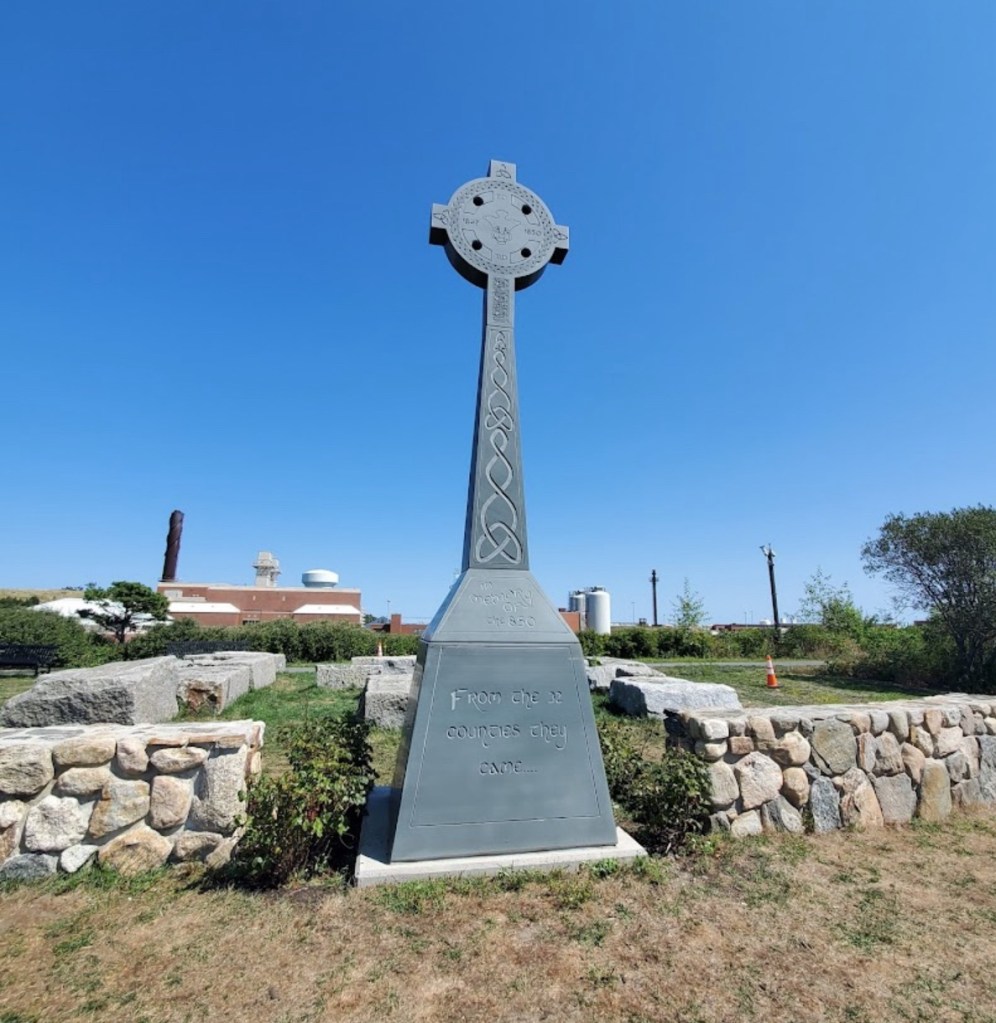
Upon becoming a priest, Patrick was dispatched back to Ireland with a twofold objective: to minister to the Christians there and to evangelize the Irish people; he utilized elements of Irish tradition, like bonfires during Easter celebrations, and melded them with Christian practices. He designed the Celtic cross by adding a sun, a revered Irish emblem, to the Christian cross, making it more acceptable to the Irish.
St. Patrick was never formally canonized by the Catholic Church, In the early centuries the process of canonization like we see today was not yet formalized; instead sainthood was bestowed upon individuals by popular acclaim. St. Patrick’s impactful life and ministry in Ireland, revered him as a saint by the people he served and the many he converted. His most redeeming quality however was saving ancient Greek, Roman, and Jewish classics as well as Christian texts when Rome burned during its fall. This in fact saved western civilization.
Because of the Irish Potato Famine of the 1850s, a substantial wave of Irish immigrants made their way to the Northeast United States, arriving at points such as Ellis Island in New York and Boston Harbor. Among these new arrivals was Patrick Kennedy, a craftsman skilled in barrel making, who settled in East Boston. These Irish Catholic immigrants, seeking acceptance in a land touted for its prosperity and opportunities, faced harsh realities upon their arrival. Contrary to tales of streets paved with gold, they were met with the challenges of an anti-immigration movement, cold weather, snow, hunger, and crime—hardships not unlike those they had fled in Ireland. However, amidst these difficulties, they found opportunities for a new start.
The Irish became one of the largest and most influential ethnic groups in the country, but especially in the Northeast playing a pivotal role in supporting the Union during the Civil War. Their contributions significantly countered the widespread prejudices fueled by the anti-immigration, anti-Catholic, Americans first “Know Nothing” movement. The resilience and growth of the Irish and Catholic communities in Boston and across the country fostered a deep sense of pride, paving the way for significant achievements. This culminated in a historic milestone: the election of Patrick’s great grandson John F. Kennedy, the first Catholic president of the United States, in 1960, marking a triumphant moment in the story of Irish Americans.
A huge part of the ascent of the Irish people was partly due to the pride of the Irish, the parallel holidays in Boston, along with the extremely popular St. Paddy’s day parades that popped around the country including Savannah Georgia which has the second largest celebration in the country.
My wife, Nina and I enjoy making the rounds on March 17, after breakfast at Connie’s Stagecoach with my favorite leprechaun, Jim Pollard we try to visit the Park Lunch in Newburyport (best cornbeef and cabbage), Master McGrath’s in Seabrook (Best Irish spirit), Brewery Silvaticus in Amesbury (best original Irish beer, St. Oblivion), and The Winner’s Circle in Salisbury (best sports bar in America). I’m almost positive the night will end at the world famous Uncle Eddies at Salisbury Beach.
This year we will also be hanging out with my friends from Greenstone Gives Inc. a non-profit in Amesbury with a mission to support local families whose children are impacted by crisis. On Saturday March 16, from 4 to 10 p.m. they will be at the Sylvan Street Grille in Salisbury for their second annual “Shamrocks, and Shenanigans” fundraiser. I hope to sing “Danny Boy” with a few of my Irish friends. “ Oh, Danny boy, the pipes, the pipes are calling…
Salisbury resident C.J. Fitzwater is a curious traveler, perpetually on the lookout for fresh frontiers. With each journey, he blends historical threads into his stories. Email him at: cfitzwater@ymail.com.
 Curious Traveler
Leave a comment