Curious Traveler: CJ Fitzwater
Country music is “three chords and the truth. — Harlan Howard
Ernest Tubb, who wasn’t known for having the greatest voice, was once asked why people liked his sound. His answer was: “When a fella puts a nickel in the jukebox, he thinks, hell, I can sing as good as that guy.”
Hank Williams never saw the age of 30 when his heart stopped beating somewhere outside of Oak Hill, West Virginia. Hank was one of those fellas putting nickels in the Wurlitzer who found his style somewhere between Tubb’s honky-tonk sound and the emotional voice of Grand Ole Opry legend Roy Acuff.
You could make a whole playlist of songs about how “Hank” did it. He is the Jesus of hillbilly music, the back seat of a Cadillac, his cross, whiskey and morphine the spikes that held him down. His music was his gospel, and for those who followed, and were saved by the blood of Hank his disciples.
That phrase “Three chords and the truth” from the early 1950s became a mission statement for country music. About the same time it was coined, producer and guitarist Chet Atkins helped shape the smooth, pop-leaning “Nashville Sound.”
The style was meant to compete with the surge of Elvis Presley and the growing dominance of rock ‘n’ roll on the radio. In place of the raw honky-tonk mix of acoustic guitar, fiddle and banjo came a steady beat and a polished, electrified blend of pop arrangements with hope of winning back a fleeing market.
As rock continued to grow through the British Invasion of the 1960s and into the disco era of the 1970s, country artists continued to evolve as well. In the mid-1970s, Willie Nelson and Waylon Jennings stepped away from Nashville’s tight studio system and helped create the riff-heavy outlaw country, which fought against the trendy Nashville Sound.
Southern rock blended country roots with louder guitars and harder rhythms, The Charlie Daniels Band and Lynyrd Skynyrd bridged the gap between the two worlds.
Then in 1991, music shifted again when Nirvana’s “Smells Like Teen Spirit” exploded on MTV. Overnight, the layered melodic power ballads with a guitar solo, and the oversaturated makeup wearing hair bands that ruled the airwaves of the mid-80s were replaced by a new lineup of raw grunge bands coming out of Seattle. Rock didn’t disappear, but its dominance did.
Country music kept moving forward. What was once called “hillbilly music,” pioneered in the 1920s by artists like Jimmie Rodgers and The Carter Family, had already laid the groundwork for much of American popular music, including rock ’n’ roll itself.
By the time Nirvana hit, artists such as George Strait, Garth Brooks and The Judds, helped usher in what became known as neo-traditional country, drawing on the roots of honky-tonk while embracing the bigger sounds of Southern rock.
Modern country superstars like Dierks Bentley and Morgan Wallen draw from all those decades of music evolution, including hip-hop morphing into the “bro-country” sound, which blends rock, auto tune pop, and even that 808 trap hip-hop sound to a twangy voice, and easy to interpret verses. In a world of AI, country music is no stranger to overproduced computer-generated sounds.
The Cumberland River is equal parts water it takes on from the Ohio, and tears from the broken dreams the city of Nashville has drawn from the thousands of talented aspiring stars who come to middle Tennessee chasing fame.
They arrive hoping to catch their break in the honky-tonks along Lower Broadway (LoBro) in what has become one of the fastest-growing cities in America. Health care is Nashville’s No. 1 industry, but honky-tonks and hillbilly music are what we know it for.
To be a honky-tonk, you need three things: live music, alcohol and a dance floor. A few originals still remain along Honky-Tonk Highway, including Nudie’s Honky Tonk and Tootsie’s Orchid Lounge, which shares an alley with the Ryman Auditorium.
The name “Nudie” comes from a Ukrainian tailor named Nudie Cohn, who created the rhinestone cowboy look that country stars began adopting in the 1940s. He also designed flashy Cadillacs like the one used by Boss Hogg in “The Dukes of Hazzard.”
His designs featured six-shooters, bull horns and silver dollar motifs that also show up throughout Nudie’s Honky Tonk. The oldest honky-tonk on Broadway even features an actual Cadillac Eldorado designed in “Nudie Style” hanging on the wall above the longest bar on the strip, which itself is decorated with rows of silver dollars.
At one time, honky-tonks like Tootsie’s Orchid Lounge, where Willie Nelson once stretched out in front of on Broadway hoping for a quick death after a discouraging stretch, shared the street with five-and-dimes, printers and department stores. That was before retail suburbanization drained downtown, leaving behind mostly pawn shops, strip clubs and a fading Ryman Auditorium after the Grand Ole Opry moved to a mall in the 1970s.
With the opening of NFL and NHL stadiums in the ‘90s, LoBro has rebounded, and Honky Tonk Highway is now lined with a refurbished Ryman and massive, multilevel bars with live music on every floor.
Most of the venues are developed and owned by hospitality groups with music stars themselves leading their name, image and likeness to the spirit of their joint. Some hold noncountry names on their marquee like Jon Bon Jovi, Kid Rock and the latest Nashville darling Jelly Roll, who coincidentally built his stardom on the redemption narrative of sobriety, yet he has the tallest honky-tonk on the strip called Goodnight Nashville.
Nashville is now Nashvegas and has gone from authentic to something closer to a row of carnival-like attractions, with barkers trying to reel you into neon-lit honky-tonks. Inside, you’ll find interiors that look like they came straight off the shelves of Hobby Lobby.
Authenticity has taken a back seat to trendy facades but trendy sells, and on a Friday night you can still find yourself standing in a long line, waiting to get into Posty’s so you can buy all the swag you want, but you won’t find Post Malone at the bar having a Bud Light in jorts.
I can’t blame anyone because no art is original. We all copy a little from our heroes. These honky-tonks, like modern country music, are all a muse to what hillbilly music was.
What country music does for us is bring us back to our first heartbreak, our first pickup truck, our departed dog and the hometown we miss. Nothing is more raw than melancholy; it gives you goosebumps, draws out a few tears, and can send you down a rabbit hole searching for an old love. A good honky-tonk and country song is cheaper than an airplane ticket, and it’ll take you on a journey.
A Chicago transplant Uber driver told me, “Nashville is like Costa Rica, it’s good for about eight days.”
That struck me as funny because the man I might consider the greatest storyteller in music, John Prine, was also raised in Chicago by parents who had come north during the Great Migration, when millions of poor folks from the South and Appalachia headed to the Midwest to work in industrial factories.
Music Row might have considered him a folksinging Midwestern Yankee, but boy was he hillbilly. He managed to sum up Nashville perfectly in the second verse of his song “Crazy as a Loon”:
“So I headed down to Nashville – To become a country star – Every night you’d find me hangin’
At every honky-tonkin’ bar – Pretty soon I met a woman – Pretty soon she done me wrong – Pretty soon my life got sadder – Than any country song
That town will make you crazy – Just give it a little time – You’ll be walking ‘round in circles
Lookin’ for that country rhyme – You’ll be waitin’ on a phone call – At the wrong end of a broom
Yeah, that town’ll make you crazy – Crazy as a loon”.
My wife, Nina, along with our friends Katie Beal and John Couture recently visited Nashville. We skipped the amenity-packed swanky hotel The Joseph and chose instead a cheap motel for a little “honky-tonk” authenticity.
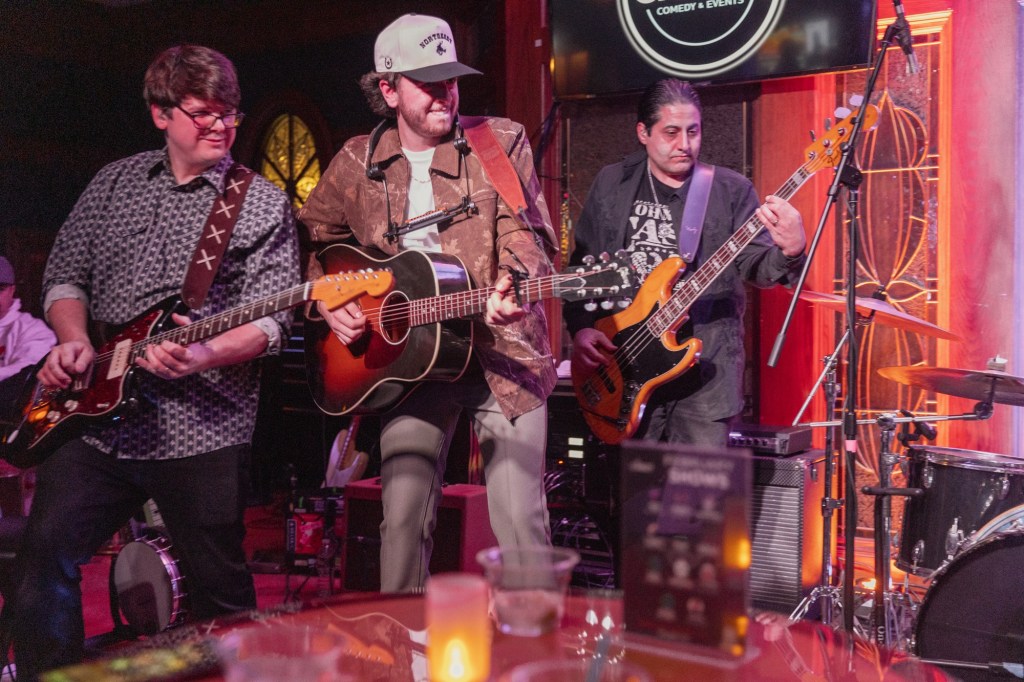
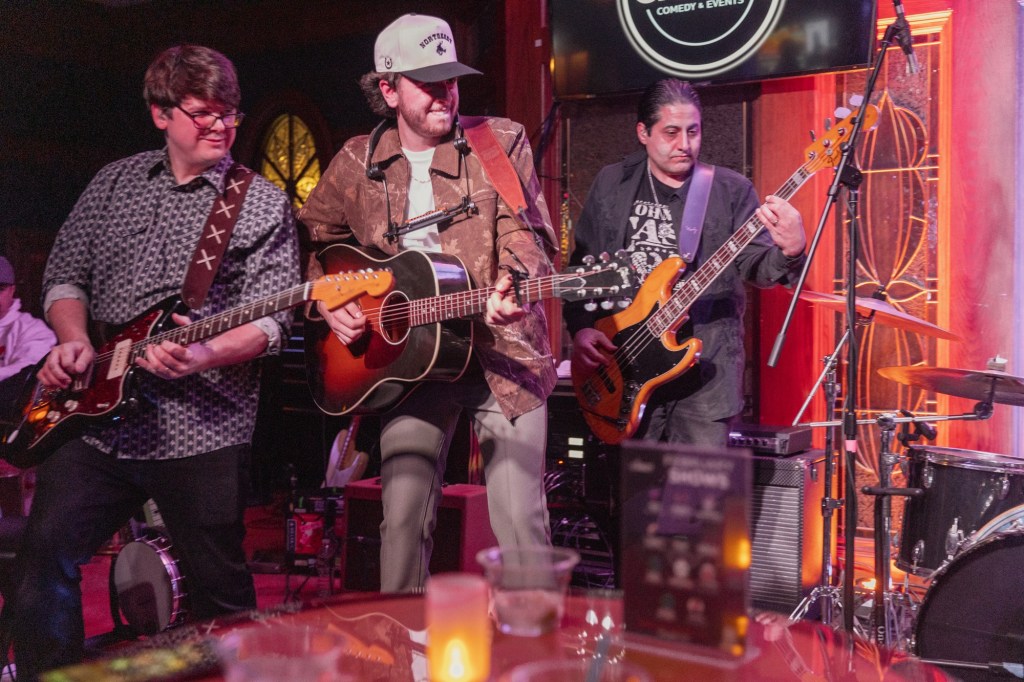
We found glimpses of it at Nudie’s Honky Tonk, and during a Gavin Marengi show, but somewhere along the way, I got lost among screaming drunken bridal parties on pedal taverns and tractor party wagons.
What really makes Nashville special is the music scene, every honky-tonk employing world-class artists from all around the country. They flock to Nashville chasing their dreams armed with their Martin D-28, or Telecaster American Professional II along with their “Nashville Number System Gig Book”.
They learn their 249 songs and take the stage night after night, hoping to make enough money for studio time to record some originals they wrote about the hometowns they miss, with maybe a little left over to pay rent.
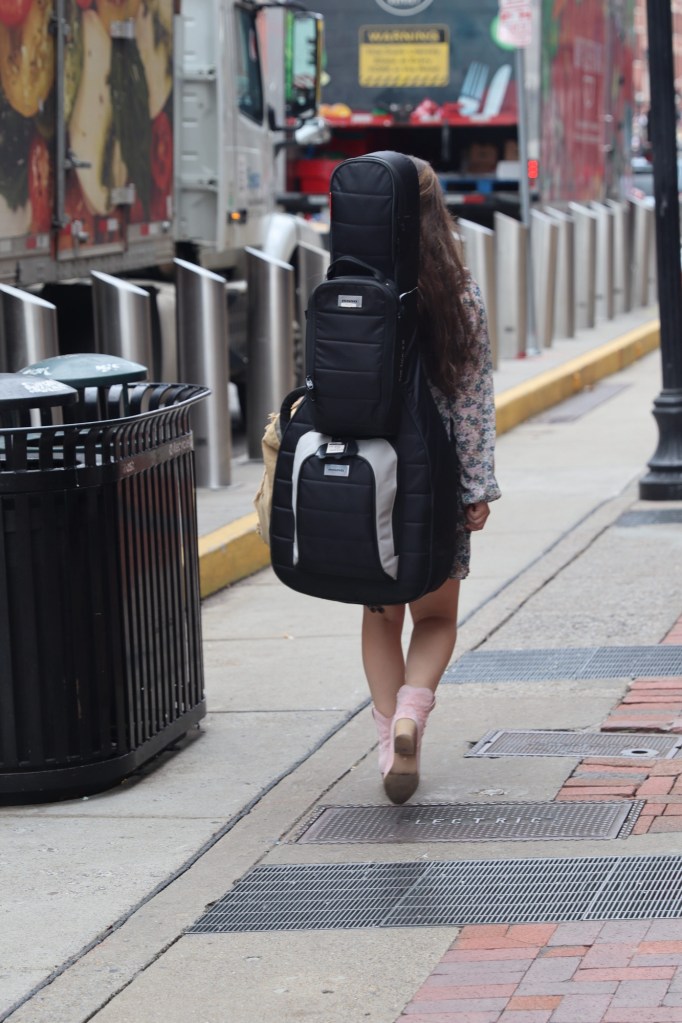
There are artists who have only been in Nashville a few days, and others who have worked every honky-tonk in town, like the talented guitarist Beth Garner. She told me, “Being a Nashville musician, you have to have a good hustle and be able to play many styles and thousands of songs well and on the spot if you want to make it here.”
Beth fights for tips to cover the bills and she is more country than the names on the marquee of the honky-tonk she’s playing in.
I spent some time listening to modern country and realized my taste sits about 1,800 miles outside of Music City, somewhere closer to the vintage sound of Colter Wall or the originality of Gavin Marengi.
I’ll take that any day over Eric Church or the 808 trap country that fills the airwaves. I’ll say a small prayer to our hillbilly lord and savior Hank Williams that the future of country music, and maybe even Nashville itself, finds its way back to three chords and the truth.
Thanks for reading and supporting local journalism. “Curious Traveler” is a series of stories written by C.J. Fitzwater. If you’re interested in meeting, sharing a meal and telling your story, send him an email at cfitzwater@ymail.com.
 Curious Traveler
Leave a comment