Curious Traveler
C.J. Fitzwater
”Now here’s a little story I have to tell about three bad brothers you know so well, it started way back in history”…— The Beastie Boys
On the rocky banks of the Piscataqua River, on a cold, late fall day in Portsmouth, New Hampshire – four months before the Battles of Lexington and Concord, Dec. 14, 1774 – is where the American Revolution began.
The long roll of the drummer’s call had slowly grown in volume, boom, boom, boom! ever since the end of the French and Indian War. That war had won all the land east of the Mississippi to Great Britain. To pay off its heavy debts, the British Parliament enacted the Sugar Act. Boom! Then came the Stamp Act. Boom, Boom! followed by the Townshend Acts, which included the tax on tea. Boom, Boom, Boom! With each new act, the drumbeat grew louder.
Then came the Boston Massacre in 1770, and the drum swelled even more. In 1772, written into the permanent record of the Salisbury town records after approval at a Town Meeting by the “freeholders and other inhabitants of Salisbury,” was a report from the Committee of Correspondence that used words from John Locke, words similar to what would soon appear in the Declaration of Independence: “That the most essential rights of mankind are life, liberty, and property.” This was an open act of treason, but approved by vote at Town Meeting. Still, the pounding of the war drum continued.
On the morning of Dec. 14, men were called together by the beating of a drum on the Portsmouth Parade, nearly a year after the Boston Tea Party had ignited 342 chests of the British East India Company’s Bohea tea, though similar “tea parties” may have predated Boston’s, including two at Market Square in Newburyport.
The drums kept pounding as men gathered from all parts of Portsmouth, with others arriving from as far as Dover, Exeter and Rye. News had spread quickly the night before, carried by an express courier bearing a letter from Joseph Warren, leader of the Sons of Liberty.
King George III had ordered an embargo on all gunpowder, cannons and muskets entering the colonies, and further commanded that existing supplies, including the ones at Fort William and Mary, be seized by British troops.
The paid express courier, Paul Revere (who earned two shillings for his ride), had departed the Green Dragon Tavern after receiving final instructions from his Masonic brethren Samuel Adams and Joseph Warren. After crossing the Mystic River, he mounted on a borrowed gray horse, he set out toward the Piscataqua, carrying word to gather men and secure the valuable munitions in preparation for war.
In his 10th ride for the liberty cause, he traveled Salem Road through Lynn and Salem, continuing through Danvers, then along Boston Post Road, crossing the bridge over the Parker River from Rowley into Newbury.
There were several ways to cross the Merrimack River. The most direct may have been down Fish Street (now State Street) to March’s Ferry, crossing into Salisbury and continuing up Ferry Road. According to Salisbury town records, Captain March was granted a petition to operate the ferry in 1687. This route was more direct than the primary postal crossing at Carr’s Island.
Carr’s Ferry would have landed at the end of Bay Road (now Jefferson Street), where an inn stood on Carr’s Island, a convenient resting place for post riders traveling between Boston and Newburyport. From there, the road led to Ferry Lots Lane, which still exists today much as it did in 1774, a narrow path running from the river to Mudnock Road, before continuing through Salisbury to Seabrook along Post Road, now Lafayette Road, and on to Portsmouth.
Another possible crossing was the Amesbury Ferry, running from Moulton’s Hill at the end of Old Ferry Road to what is now Alliance Park at the confluence of the Powwow and the Merrimack rivers.
From there, the road to Portsmouth could be picked up nearby, leading through what was then West Salisbury near Rocky Hill and up Main Street toward the state line in Seabrook. Carr’s Ferry was falling out of favor, and the Amesbury Ferry too far west, and with Revere’s mission requiring discretion, March’s Ferry remains the most logical route.
It is possible that Paul Revere stopped in either Salisbury or Newburyport to rest and water his horse, based on the timing of his 60-mile ride. The countryside itself seemed to feel the steady beat of the drum, and Revere, already a growing figure in the Patriot cause, would have found willing hosts in any town along the way.
He continued north along Post Road, passing through stretches of farmland in the coastal countryside of New Hampshire before arriving at the Portsmouth Parade.
There, Revere ran into a loyalist and former Boston boatbuilder, William Torrey. Paul said, “Howdy”, he said, “Hi,” and asked where he might find William Cutts, head of the local Committee of Correspondence (an underground group of Patriots who organized communication among leaders during the planning of the revolution).
Revere located Cutts at Stoodley’s Tavern, where he delivered the letter from Joseph Warren and relayed all he knew of British troops who he said were on their way to secure the king’s powder and munitions. This turned out to be wrong intel.
Torrey, however, carried word of Revere’s arrival to loyalist Gov. John Wentworth, and the drumbeat thundered on, boom!
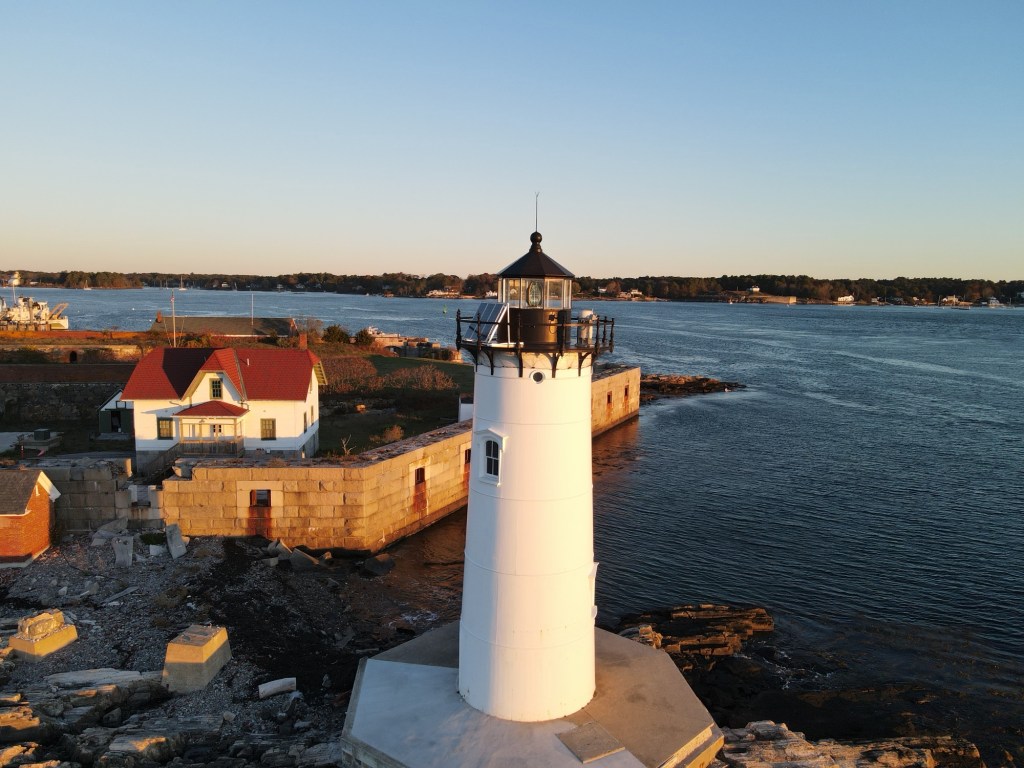
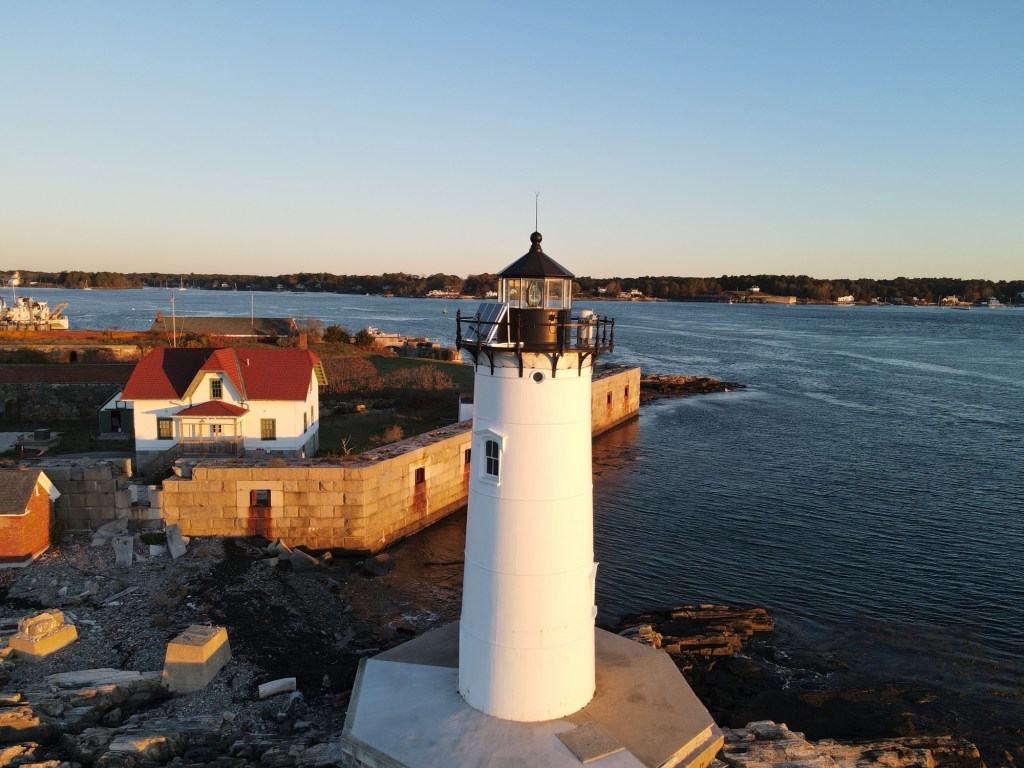
Hundreds of men answered the “drummer’s call,” gathering in readiness to seize the valuable stores held at the aging fort built into the New Hampshire granite at the mouth of the Piscataqua River, three miles downriver from Portsmouth. Loyalists also arrived, including the governor’s secretary, warning that such an act would be considered the highest act of treason against the crown. The warning went unheeded.
The rebels set out for Fort William and Mary, which was defended by a small loyalist force, though there remained the possibility that British regulars had already arrived to reinforce it. Men came by horse, on foot and in flat-bottomed boats, scows and gundalows, crossing from Kittery and from Great Bay from Durham and Dover.
They were led by future Gov. John Langdon, a merchant who had lived near the fort his entire life. The fort itself was under the command of Royal Captain John Cochran, who had been warned by Wentworth and had hastily reinforced his position.
Langdon approached the entrance and informed Cochran of the Patriots’ intent to take the supplies. Cochran refused, declaring that if any rebel “attempted to come into the fort, their blood will be upon their hands, for I will fire on you.”
The fort was soon surrounded. British defenders stood ready with cannon and muskets. At Langdon’s order, the assault began. Rebels surged over the six-foot walls as the steady beat of drums, now joined by fifes, were the soundtrack of the chaos. Cochran ordered the cannons fired, and though no one was struck, the moment marked the first violent clash, the first shots fired of the American Revolution.
The booty from the siege was substantial, some 100 barrels of gunpowder, enough to fire 500 million musket shots. The rebels quickly loaded the 100 pound barrels of powder onto their gundalows and, with the help of the incoming tide, carried it back up the Piscataqua River to Great Bay, where it was carefully distributed.
Twenty-nine barrels were sent to Exeter, 12 to Kingston, eight each to Epping and Nottingham, and four to Portsmouth. An additional 25 barrels were hidden in a church in Durham. New Hampshire was now stocked The rebels returned the following day led by Gen. John Sullivan and captured 16 fine cannons with their carriages, along with cannonballs, and dozens of muskets, pistols and other weapons. These supplies would soon be used in the Battles of Lexington and Concord and later at the Battle of Bunker Hill.
Paul Revere returned to Boston, a city now firmly under the weight of the Intolerable Acts, which required local officials to provide housing for British soldiers. His more famous ride was yet to come.
New Hampshire, meanwhile, would see no major battles of that war, or any war within its borders since.
And still, the drum beats on … .
This story was inspired by the work and writing of Joyce McKenna. Thanks to Dana Echelberger of Newburyport Public Library, and Melinda Morrison, town clerk of Salisbury, for their help in research. I also referenced “History of Newburyport Massachusetts” by John J Currier, “The Ride Paul Revere and the night that saved America” by Kostya Kennedy, and “1776” by David McCullough.
Thanks for reading and supporting local journalism. “Curious Traveler” is a series of stories written by C.J. Fitzwater. If you’re interested in meeting, sharing a meal, and telling your story, send him an email at cfitzwater@ymail. com.
 Curious Traveler
Leave a comment