Curious Traveler
C.J. Fitzwater
It’s graduation party season, and we received an invitation to our friends E.J. and Norma Dean’s son Colin’s graduation celebration at their mountain home in Wolfeboro, New Hampshire.
Wolfeboro is also where Colin graduated from Brewster Academy. There, he served as class marshal and received the Ronald “Buzzy” Dore Memorial Award.
The award is presented to a graduating senior who best exemplifies outstanding leadership in academics, athletics and extracurricular activities while remaining a devoted “friend to all.” Colin has a gravitational pole like a star, and he attracts planets of different folks to his orbit, and if you’ve ever met Colin, you’d understand why he was chosen for that commencement honor.
The apple doesn’t fall far from the tree. Both sides of Colin’s family, the Deans and the Silsbys, have long been known as friends to all. E.J.’s family, who run the family business Fiesta Shows alongside his legendary father, Gene Dean, trace their Salisbury Beach roots back nearly a century when the original Eugene Dean first came to town running games of chance. The Deans built a business on gravity, and a reputation on being welcoming, generous and a friend to all.
On his mother’s side, the same story holds true. Bill Silsby continued a business making homemade candy and ice cream at Willey’s, on the corner of Broadway and Railroad Avenue, where his wife, Norma’s, family first established roots at Salisbury Beach in 1913. Once again, it was a business built on being a friend to all. Colin draws his DNA from two families where being a friend was good business.
On the ride up, I took Route 16 off I-95 from Portsmouth onto New Hampshire Route 109, the Gov. John Wentworth Highway, and immediately thought, wow, they named a highway after a loyalist? Not long ago, I had briefly studied Wentworth while writing a piece about Paul Revere.
I almost wanted to pull over and start my research right there. After all, the Wentworth family had overseen New Hampshire almost since its earliest settlement.
It was during the reign of King George II that New Hampshire’s borders were established, defining the boundary as three miles north of the Merrimack River from Pawtucket Falls in Lowell to the Atlantic Ocean at Salisbury, creating the curvy border in northeast Massachusetts before extending straight westward to New York.
The 1740 ruling by King George II ultimately settled the long-running boundary dispute between New York, Massachusetts and New Hampshire; it eventually created Vermont. King George II also appointed Benning Wentworth the first royal governor of the Province of New Hampshire.
After receiving the royal appointment after his uncle, John Wentworth built much of the colony’s infrastructure. He constructed a road from his summer home in Wolfeboro to the western part of the colony in Hanover, where he donated land for what became Ivy League Dartmouth College.
The school was founded “for the education and instruction of youth of the Indian tribes in this land in reading, writing, and all parts of learning which shall appear necessary and expedient for civilizing and Christianizing children of pagans, as well as in all liberal arts and sciences and also of English youth and any others.”
As you drive toward Wolfeboro, a town granted to John by his uncle, their family legacy hits you directly in the face. Traveling up the Governor John Wentworth Highway, you pass the 96-acre Wentworth Farm, a former 4,000-acre plantation once owned by the governor before his property was confiscated following his expulsion in 1775.
You also pass Wentworth State Park, which sits on, you guessed it, Wentworth Lake. Wentworth by the Sea, the Gilded Age resort in New Castle, New Hampshire, was built near the Wentworth-Coolidge Mansion on Little Harbor a century after John Wentworth was banished.
John named New Hampshire’s first five counties. Strafford County was named after Thomas Wentworth, Earl of Strafford, an ancestor of the family. Rockingham County was named for Charles Watson- Wentworth, 2nd Marquess of Rockingham, cousin of Gov. John Wentworth and prime minister of Great Britain, whose government repealed the hated Stamp Act.
Gov. Wentworth never enforced the act and became popular with the people of New Hampshire. Some historians believe his relationship with Rockingham helped influence the repeal of a law that fueled Colonial revolt over taxation without representation.
Wentworth remained popular until he found himself defending policies brought on by the Townshend and Intolerable Acts. The family’s ties to English nobility contributed greatly to the rise of the Wentworths in New England, but that same loyalty would eventually bring an end to their rule.
Five months before Paul Revere’s most famous ride, he was commissioned to travel to Portsmouth to warn of the possible arrival of British troops at Fort William and Mary to secure the colony’s large supply of gunpowder and munitions.
Revere traveled through Newburyport and Salisbury on his way north. Upon learning of Revere’s arrival, Gov. Wentworth anticipated trouble. He warned the fort’s commander, Capt. John Cochran, to be on alert and sent an urgent request for help to His Majesty’s commander-in-chief, Gen. Thomas Gage in Boston.
That help never arrived. The force of five men protecting the fort was quickly overwhelmed. Cochran ordered the fort’s cannons fired on the rebels, an act that could be considered the first military action of the Revolutionary War, though it is usually overshadowed by the more famous Battles of Lexington and Concord.
The gunpowder, muskets and munitions seized during the raid were distributed throughout New Hampshire, and Gen. John Sullivan later used many of those supplies during the Siege of Boston and Battle of Bunker Hill.
Ironically, Wentworth helped organize and strengthen the very militia that raided the fort. As royal governor, he took a handsoff approach to government and maintained a productive relationship with New Hampshire’s elected House of Representatives.
He was considered popular and was not viewed as a tyrant. The revolution was as much a civil war as it was a war against England. The American Civil War pitted the North vs. South, however the Revolution had actual neighbors on opposing sides. Wentworth chose to be loyal to the crown.
“They say ev’ry man needs protection They say ev’ry man must fall Yet I swear I see my reflection Some place so high above this wall See my light come shining From the west unto the east Any day now, any day now I shall be released.”-I shall be released, Bob Dylan
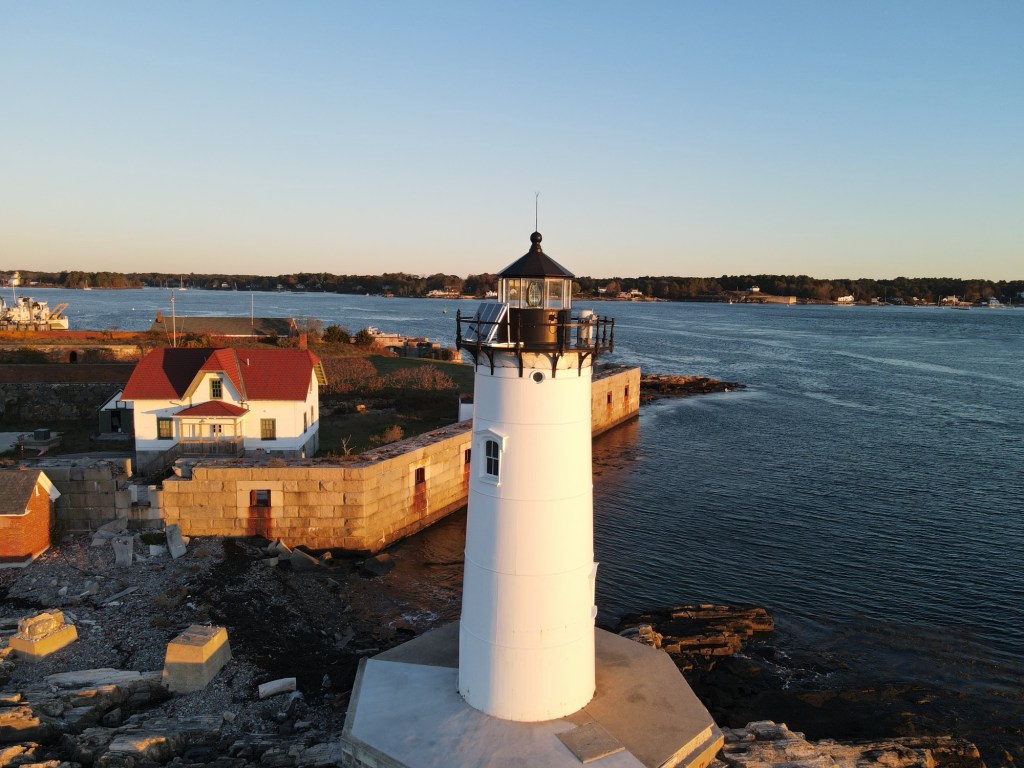
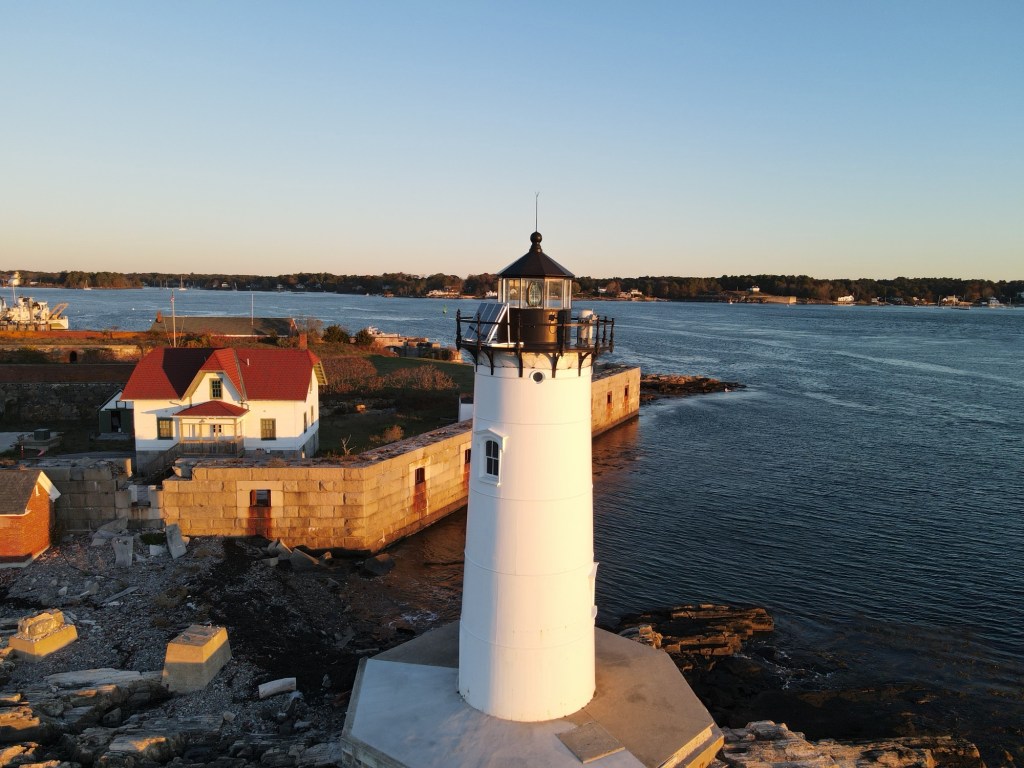
By June 1775, the conflict had escalated. Local militia surrounded the governor’s mansion, forcing Wentworth to flee. He first escaped from his home in the south end of Portsmouth through Little Harbor past his uncle’s mansion to Fort William and Mary in New Castle, which was protected by the Royal Navy ship Scarborough before later fleeing to British-occupied Boston.
Wentworth was driven from New Hampshire where the Wentworth family had become among the wealthiest in the province and its largest landowner. Benning and John Wentworth were New Hampshire’s only two royal governors, ruling the province for a combined 35 years, before the latter met his fall.
After the British evacuation from Boston, Wentworth went to London, until he was rewarded by the crown for his loyalty and was appointed lieutenant governor of Nova Scotia. He became a land speculator of the Great North Woods of Canada, but never amassed the wealth or influence that the Wentworth family enjoyed in New Hampshire.
He lived the rest of his life with regret, missing the land he was forever banned from.
John married his wife, Frances Deering, his first cousin, just 10 days after the funeral of her first husband and shortly after being appointed governor. He was so devoted to his stunning bride that he ordered the towns of Deering and Francestown named in her honor. During their flight from New Hampshire, it is said the horses could not carry Lady Wentworth and six chests filled with silver and gold plates, coins and other valuables.
Legend holds that the treasure was buried deep in the woods somewhere between Portsmouth and Smithtown (Seabrook), where it has never been found. Frances missed New Hampshire, and was especially miserable in Nova Scotia, until she found excitement when future king, Prince William, arrived and began an affair with the beautiful mistress.
The drive to the Dean’s home in Wolfeboro opened my eyes to the history of this important son of New Hampshire. His ancient footprints remain, from roads and towns to parks, lakes and landmarks. New Hampshire loved John Wentworth, who was born there. At least, they did until they didn’t.
I want to thank historian Tom Sandford, who holds so much love and knowledge of Portsmouth. He inspires so many of my stories, and he is always right on. I love you Tom, keep fighting, and keep telling your stories. I’d also like to thank my Portsmouth tour guide Bob Merrill, who took me on a tour of Wentworth’s homes and escape route.
Thanks for reading and supporting local journalism. “Curious Traveler” is a series of stories written by C.J. Fitzwater. If you’re interested in meeting, sharing a meal, and telling your story, send him an email at cfitzwater@ymail. com.
 Curious Traveler
Leave a comment