Curious Traveler
CJ Fitzwater
As a United States Navy sailor you are required to learn the Sailor’s Creed which is “I am a United States Sailor. I will support and defend the Constitution of the United States of America and I will obey the orders of those appointed over me. I represent the fighting spirit of the Navy and those who have gone before me to defend freedom and democracy around the world. I proudly serve my country’s Navy combat team with Honor, Courage, and Commitment. I am committed to excellence and the fair treatment of all.”
During the Revolutionary War, the Continental Navy possessed neither the money nor the infrastructure to challenge the greatest naval power in the world. The Royal Navy commanded hundreds of warships that protected British commerce, blockaded American ports, and transported soldiers across the Atlantic. By comparison, the Americans relied on a small collection of converted merchant vessels, and privateers, willing to fight against overwhelming odds.
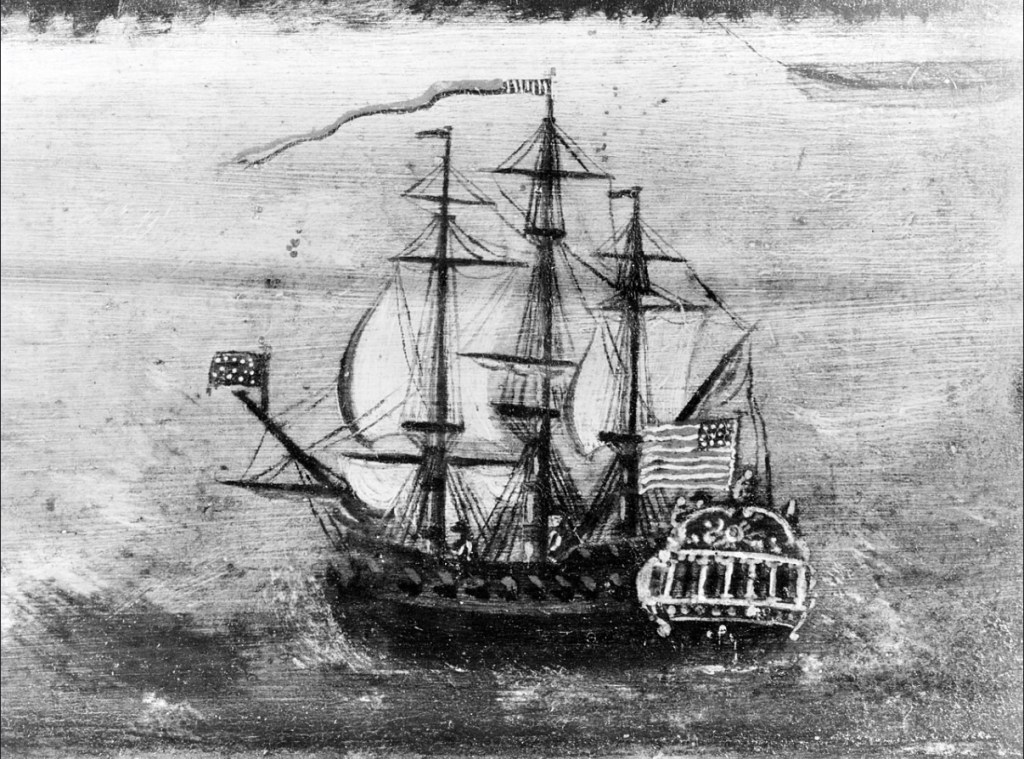
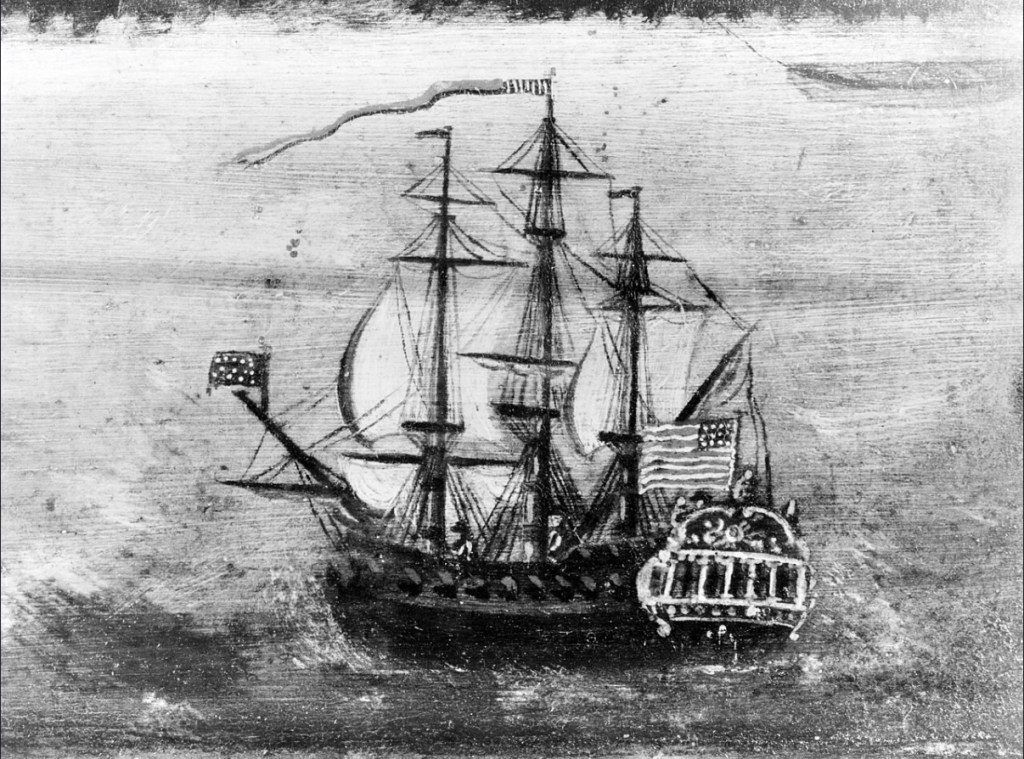
Victory at sea would never come by matching Britain ship for ship. Instead, it would depend upon speed, ingenuity, bravery, and a small number of exceptional vessels. In 1777, the Continental Congress authorized the construction of thirteen frigates to strengthen the struggling Continental Navy. One of those ships was assigned to Salisbury Point, where master shipbuilder William Hackett possessed the skill and a supply of seasoned timber capable of producing a hull renowned for speed, stability, and maneuverability.
The vessel built at Salisbury Point measured approximately 126 feet along her gun deck, carried 36 guns, and was one of the largest ships constructed for the Continental Navy. She possessed graceful lines and exceptional sailing qualities. John Adams later recalled hearing the French naval minister declare that Alliance was among the finest frigates afloat, superior to those serving either France or Great Britain.
Such praise was remarkable considering the circumstances under which she was built. The United States did not yet exist as a recognized nation. Congress struggled to pay its soldiers, and supplies were scarce.
When Congress named the new frigate Alliance, it did so to commemorate one of the Revolution’s most important diplomatic achievements: the Treaty of Alliance signed between France and the United States in February 1778. French recognition transformed the conflict. Which to that point was a colonial rebellion, it had now grown into a world war, forcing Britain to fight not only in North America but across Europe, the Caribbean, and the world’s oceans. Without France, American independence might never have been secured.
While the Alliance was being built in Salisbury, another remarkable story was unfolding across the Atlantic.
John Paul Jones remains one of the most fascinating figures of the American Revolution precisely because he refuses to fit neatly into the category of hero.
Born John Paul in Kirkbean, Scotland, in 1747, he first went to sea as an apprentice at the age of thirteen. The sea became his education. Before reaching adulthood, he had crossed the Atlantic repeatedly, mastering trigonometry while commanding merchant vessels in the West Indies trade.
John Paul’s early reputation was that of a pirate. He killed a mutinous sailor while defending himself aboard a merchant vessel. In another incident, a crewman died after receiving a severe flogging ordered by Jones for insubordination. Although Jones insisted he had acted within the law, public scrutiny intensified. Facing legal troubles in the Caribbean, he sailed to Virginia in 1773, where he quietly added the surname “Jones.”
America gave him an opportunity unavailable anywhere else. When the Continental Congress established a navy in October 1775.
Jones first gained recognition while commanding the sloop-ofwar Ranger, which was built in Portsmouth, New Hampshire.
In February 1778, Ranger sailed for France carrying dispatches from the Continental Congress. On Feb. 14, while anchored in Quiberon Bay, the French fleet exchanged formal salutes with Ranger. It marked the first official recognition of the American flag by a foreign nation, an acknowledgment that the United States had entered the community of nations. Jones wrote that the honor belonged not to himself but “to the American flag.”
From France, Jones carried the war directly to Britain. In April 1778, Ranger entered the harbor at Whitehaven on England’s northwest coast. Jones hoped to burn merchant shipping and create panic among a population that had never imagined an American warship appearing in its own harbor. Although the raid accomplished little physical damage, its psychological impact was enormous. British newspapers expressed outrage that the war had reached home waters.
Only days later came his greatest triumph aboard Ranger. Off Carrickfergus, Ireland, Jones encountered HMS Drake, a Royal Navy sloop. After a hard-fought engagement lasting just over an hour, Drake struck her colors. It was the first time an American naval vessel had defeated a British warship in British home waters. Britain realized that its own coastline was vulnerable.
By the summer of 1779, the frigate Alliance had become one of the most valuable ships in the Continental Navy. Fast, heavily armed, and admired by naval officers, she seemed destined for greatness. The Continental Congress placed the frigate under the command of French Captain Pierre Landais, who joined Commodore John Paul Jones’s squadron in France. It would prove to be one of the most controversial command decisions of the Revolutionary War. Jones had been given command of a small multinational squadron assembled largely through French support. His flagship was not the sleek Alliance, but the aging Bonhomme Richard, presented to America by France. Jones named her in honor of Benjamin Franklin’s Poor Richard’s Almanack, known in France as Les Maximes du Bonhomme Richard.
The squadron was plagued by divided authority, conflicting personalities, and competing national loyalties. Jones commanded the squadron. Landais never accepted that authority.
On September 23, 1779, off Flamborough Head on the eastern coast of England, Jones’s squadron encountered a large British merchant convoy escorted by the frigates HMS Serapis and HMS Countess of Scarborough.
As darkness fell, Bonhomme Richard engaged the newer and more heavily armed Serapis. The British ship possessed superior firepower and quickly inflicted devastating damage. The two ships became locked together by their rigging, transforming the naval battle into a brutal fight at point-blank range. Marines fired from the mastheads while sailors battled across shattered decks. Cannon blasted through splintering timbers from just feet away.
At one point, believing the American ship was beaten, Captain Richard Pearson of Serapis called upon Jones to surrender. Jones answered with the famous words “I have not yet begun to fight.” Jones had no intention of striking his colors.
Captain Landais repeatedly ignored Jones’s signals throughout the engagement. Instead of coordinating attacks against the British, Alliance maneuvered independently around the battlefield. On more than one occasion, Landais fired broadsides that struck both HMS Serapis and Jones’s own flagship. The actions nearly cost Jones the battle.
However the same devastating broadsides that tore into Bonhomme Richard also inflicted severe damage upon Serapis. Combined with the relentless determination of Jones and his exhausted crew, the punishment eventually forced the British captain to surrender. Jones had achieved the greatest naval victory in American history, and the ship built in Salisbury helped make him immortal.
If John Paul Jones became the Revolution’s most celebrated naval warrior, Captain John Barry became the architect of its future.
Born in County Wexford, Ireland, Barry immigrated to Philadelphia and established himself as America’s finest merchant captain before the Revolution.
Congress entrusted him with several important commands, but it was aboard Alliance that Barry achieved some of his greatest successes. In May 1781, while escorting the Marquis de Lafayette, who was returning to France after helping secure support for the American cause Alliance encountered the British warships HMS Atalanta and HMS Trepassey. During the fierce engagement that followed, Barry was seriously wounded by grapeshot. His officers urged him to strike the American flag. Barry refused. “I’ll die first,” he answered. Unable to remain on deck, Barry directed the battle from below while his officers continued the fight. When the wind shifted in Alliance’s favor, the American frigate brought her superior firepower to bear, forcing both British ships to surrender. It was a remarkable victory for the Salisbury-built frigate.
Yorktown had effectively ended major military operations on land in 1781, But the Atlantic Ocean remained dangerous. On March 10, 1783, Captain Barry, commanding Alliance, encountered HMS Sybil while escorting the Spanish merchant ship Duc de Lauzun. Although the Treaty of Paris had already been signed in Paris, neither captain knew it. The two warships exchanged heavy fire before Sybil withdrew. This was the last naval battle of the American Revolution. Salisbury’s great frigate built for the Continental Navy fired the Revolution’s final naval shots.
John Barry became the senior commissioned officer under the new Constitution, trained the Navy’s earliest commanders, and along with Jones is considered the Fathers of the U.S. Navy.
President Theodore Roosevelt considered Jones, who died of kidney failure in Paris at the age of 45, to be one of America’s greatest heroes. Roosevelt ordered American diplomats to locate Jones’s remains. The task fell largely to General Horace Porter, a former Union officer, diplomat, and historian. After years of research, excavation, and forensic examination, Porter’s team discovered Jones’s body beneath the former Saint Louis Cemetery in Paris, remarkably preserved inside a sealed lead coffin.
In 1905, the American cruiser USS Brooklyn carried Jones home to rest beneath the chapel at the United States Naval Academy in Annapolis. Roosevelt believed that every Navy sailor should know the story of the man whose determination helped create an American tradition at sea.
The frigate Alliance and a son of Salisbury William Hackett influenced shipwright Joshua Humphreys who built the United States first six heavy frigates including the USS Constitution. Alliance fought beside John Paul Jones at Flamborough Head, She carried Lafayette, and under John Barry she won the Revolution’s final naval battle, before she eventually wore out. Salisbury can claim its own stake in the founding of the U.S. Navy.
Our son, Max departed for Recruit Training Command last week at the Naval Station Great Lakes. Part of his training to become a sailor is learning the history which I just wrote about. Max, the only graduate from Triton this year to enlist in any branch of the armed services, takes with him a heritage of Navy history built right here on the banks of the Merrimack.
Note: Salisbury Point became part of Amesbury in 1886. Alliance Park at the intersection of the Powwow, and Merrimack Rivers is named after the ship and Treaty of Alliance.
Thanks for reading and supporting local journalism. “Curious Traveler” is a series of stories written by C.J. Fitzwater. If you’re interested in meeting, sharing a meal, and telling your story, send him an email at cfitzwater@ymail. com.


Leave a comment